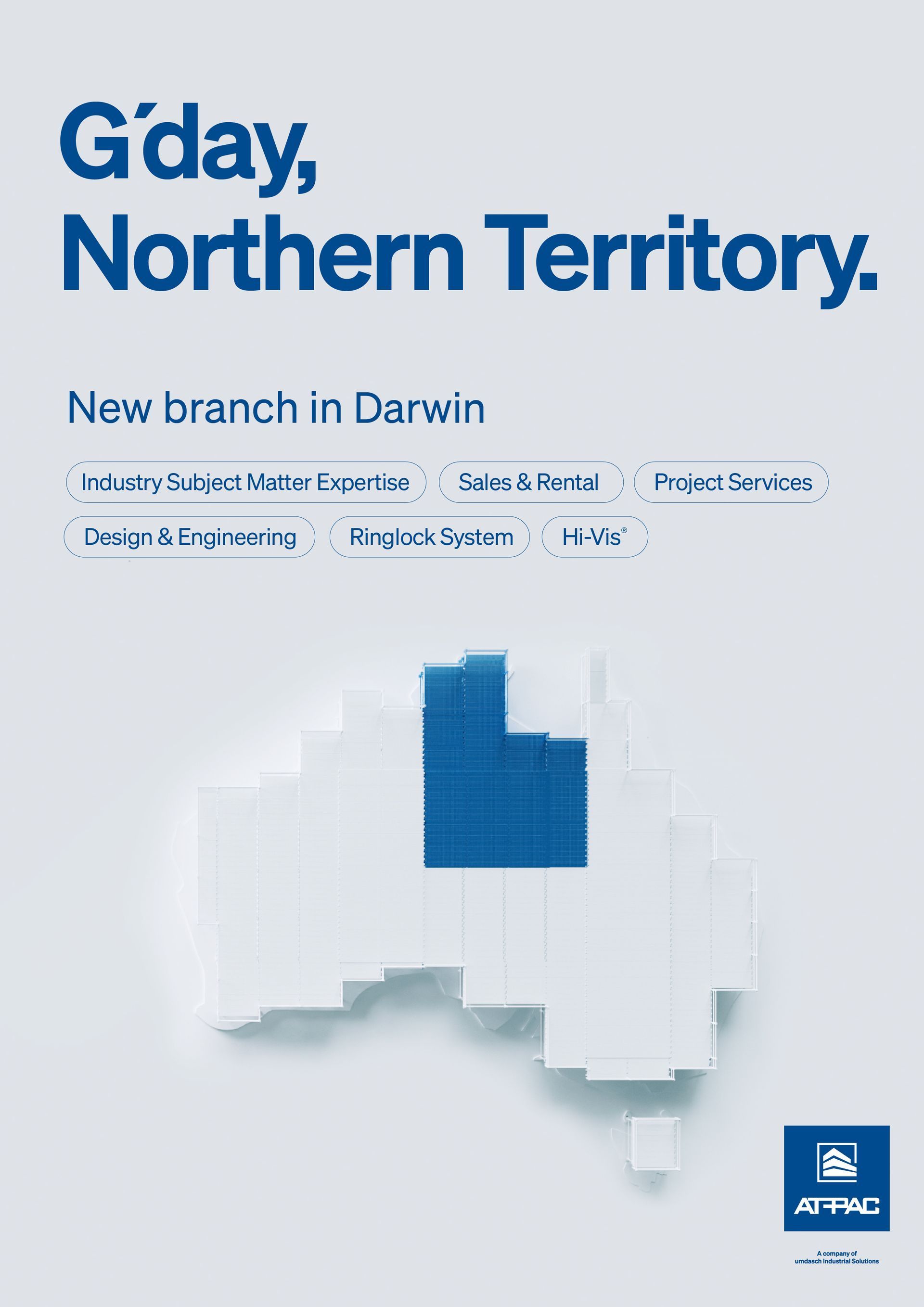
AT-PAC Expands Global Footprint with New Darwin Branch Opening AT-PAC continues to strengthen its global presence with the official opening of its new branch in Darwin, Northern Territory, Australia- marking another strategic step in bringing high-quality scaffolding solutions closer to customers across key industrial and infrastructure markets. Strengthening Local Presence in the Northern Territory The Darwin branch represents a significant investment in the Northern Territory, reinforcing AT-PAC’s commitment to supporting industrial, energy, mining, and infrastructure projects with locally available inventory, engineering expertise, and responsive service. By expanding its footprint in the Northern Territory, AT-PAC is better positioned to: Reduce lead times for customers Provide faster access to Ringlock scaffolding systems Deliver localized support backed by global standards This new location ensures customers across the Northern Territory and surrounding regions have direct access to the equipment and expertise needed to execute projects safely, efficiently, and reliably. Built for Proximity, Designed for Performance At the core of AT-PAC’s global strategy is a simple principle: proximity to the customer matters. The Darwin branch has been designed to function as more than just a distribution point. It serves as a hub for: Scaffold sales and rental solutions Engineering and technical support Project collaboration and planning With a strong local team in place, the branch enables closer partnerships with contractors, industrial clients, and project stakeholders throughout Northern Australia. Supporting Growth Across Key Industries The Northern Territory continues to see strong investment across major industrial sectors, making Darwin a strategic location for AT-PAC’s continued growth. Key industries supported by the new branch include: Oil & Gas Mining Energy Infrastructure Defence and Marine The Darwin expansion allows AT-PAC to further support these industries with scalable scaffold systems designed to meet the demands of complex and remote projects. A Continued Commitment to Global Expansion The opening of the Darwin branch is part of AT-PAC’s broader mission to become a top-tier global scaffolding provider. By investing in regional infrastructure and strengthening its branch network, the company continues to deliver on its promise: The right scaffold system—available where and when it’s needed.
Long before cranes and concrete pumps, builders relied on scaffolding to turn bold ideas into structures that reached toward the sky. For thousands of years, it has quietly made ambitious building possible, from cave paintings to skyscrapers. Understanding the history of scaffolding reveals how human ingenuity and materials science combined with safety culture evolved alongside architecture itself. For historians, scaffolding tells a story of problem-solving. For construction professionals, it explains why modern systems look the way they do. And for today’s builders and inspectors, it answers an old question that still matters: When was scaffolding invented, and how did it become the engineered system we rely on today?
Early Origins: Prehistoric to Ancient Civilization Humans likely began using primitive scaffolding the moment they wanted to build or decorate something higher than arm’s reach. There’s no single moment we can point to and say definitively who invented scaffolding — it emerged organically as a practical solution, not a formal invention. Prehistoric evidence suggests early humans used temporary platforms or lashed supports to reach elevated surfaces. The famous cave paintings in the Caves of Lascaux , for example, show artwork placed high on cave walls, strongly implying the use of some form of staging or raised access. As civilizations advanced, scaffolding became more deliberate and structured. Ancient builders relied heavily on timber frameworks lashed together with rope or fiber to create working platforms around massive projects. These early building scaffolds were an important part of shaping the ancient world. Ancient Egypt, Greece, and Rome — all of these civilizations used wooden scaffolding to construct monumental works. Without these temporary structures, building pyramids, temples, aqueducts, and statues would have been nearly impossible. Some early highlights of primitive scaffolding use include: Wooden frames and ramps supporting stone placement on pyramids and ziggurats Timber scaffolds Greek artisans used to carve and assemble temples Roman scaffolding systems supporting arches, columns, monumental facades, and similar structures At its core, scaffolding has always been a foundational building-enabler. Wherever humans built upward, scaffolding followed.
Medieval and Renaissance Era: Wood, Rope, and Early Engineering During the Middle Ages, scaffolding techniques changed slowly but steadily. The medieval scaffold was still primarily made of simple materials — timber, planks, and rope — but builders became more skilled in using them efficiently and at greater heights. Cathedrals, castles, monasteries, and abbeys defined this era. Many of these projects took decades or even centuries to complete, requiring scaffolding that workers could adapt and dismantle or rebuild repeatedly as construction progressed. Timber scaffolding played a central role in medieval architecture. Builders used vertical poles set into the ground or built into walls, with horizontal ledgers supporting wooden platforms. These systems were simple but effective. Despite their effectiveness, medieval scaffolds had serious limitations: Wood was vulnerable to rot and moisture, along with insect damage Lumber quality varied widely, affecting stability Assembly was labor-intensive and dangerous Safety was largely a matter of experience and faith. Falls were common, and there were no standardized load limits or protective features. Historical accounts, including references from classical historians like Herodotus , help illustrate how risky elevated work could be in pre-modern construction. Still, these challenges pushed early engineering forward. Builders learned through trial and error, refining methods that would influence scaffolding design for centuries.
Industrial Revolution and Rise of Metal Scaffolding The 19th century marked a turning point in scaffolding history. Industrialization changed how buildings were designed and how scaffolding needed to perform. As structures grew taller and heavier, timber scaffolding reached its practical limits. This period saw the transition from wood to metal (first iron and later steel). Tubular metal scaffolding offered greater strength and consistency, along with durability. Metal scaffolding introduced true modularity. Standardized tubes, couplers, fittings, and other components allowed workers to assemble scaffold structures faster and with more predictable load capacity. This shift dramatically improved both productivity and safety. Key innovations of this era included: Steel and iron tubes replacing irregular timber poles Mechanical couplers enabling secure, repeatable connections Modular layouts adaptable to complex building shapes These advancements supported the rise of modern cities. High-rise construction, factories, infrastructure, and other projects all depended on reliable industrial scaffolding. And it had become an industry-standard construction tool rather than a temporary workaround at this point.
20th Century Onward: System Scaffolding, Safety Standards, and Modern Practices The 20th century brought the most dramatic changes in scaffolding design and usage. Standardized system scaffolding emerged, transforming elevated access into a highly engineered discipline. Prefabricated systems introduced consistent components and predictable load ratings, along with faster assembly. In fact, system scaffolding was becoming the norm on large projects by the mid-20th century. Equally important was the rise of safety regulation. Governments and industry organizations began formalizing standards to protect workers. In the U.S., agencies like OSHA played a major role in reshaping how scaffolding was designed, erected, inspected, and maintained. The shift was profound: Scaffolding moved from improvised platforms to regulated structures with: Engineered base plates and anchors Guardrails, toe boards, and access ladders Documented load capacities and inspection requirements These standards reduced accidents and improved efficiency, while also elevating scaffolding from a temporary necessity to a specialized trade.
Global Variations: Bamboo, Timber, and Regional Traditions While metal scaffolding dominates much of the world today, certain regions still use traditional materials. Bamboo scaffolding, especially in parts of Asia, remains a striking example of regional adaptation. Bamboo is lightweight and flexible, while also being strong relative to its weight. Skilled scaffolders can assemble complex structures quickly using rope lashings and time-tested techniques. This method has deep cultural roots and is still used for maintenance and construction in dense urban areas. But traditional scaffolding methods face limitations in modern contexts. Compared to steel systems, bamboo and timber scaffolds typically have lower load capacities and shorter lifespans, along with greater variability in performance. The contrast between traditional practices and modern demands highlights why engineered scaffolding systems ultimately prevailed for large-scale, high-risk projects.
Modern Innovations and the Future of Scaffolding Today’s scaffolding reflects centuries of accumulated knowledge. Lightweight metals — aluminum, advanced steel alloys, and modular prefabrication — dominate modern job sites. System designs, such as Ringlock scaffolding , allow for rapid assembly and flexible configurations, along with high load capacity. These systems integrate seamlessly with modern safety accessories, including engineered couplers, guardrails, anchors, and safety nets. Technology is also shaping the future. Digital planning tools, like CAD and BIM, help engineers design scaffolding layouts before materials ever arrive on site. Inspections may increasingly involve sensors, drones, automation, and similar tech tools, especially for large or complex structures. Modern manufacturers like AT-PAC build on this long history, combining proven principles with contemporary engineering to meet today’s top demands for safety, compliance, and efficiency.
Why Knowing Scaffold History Matters and What It Means for Today History explains why modern standards exist and why shortcuts often mirror past failures. Looking back shows how material limitations and safety risks combined with engineering challenges shaped today’s systems. It also reinforces why compliance matters and why engineered solutions outperform improvised ones. For modern builders and inspectors, scaffold history offers perspective, connecting craftsmanship with regulation and innovation with responsibility, while also combining tradition and progress. Scaffolding has always been about enabling people to build higher and safer. Knowing where it came from helps ensure we keep building the right way — now and into the future. SOURCES https://www.scafom-rux.com/en/scaffolding-blog/a-brief-history-of-scaffolding https://en.wikipedia.org/wiki/Scaffolding https://www.avontus.com/blog/history-of-scaffolding/ https://www.stivesscaffolding.com/history-of-scaffolding https://championscaffold.com/blog/history-of-scaffold/ https://www.scaxa.ae/scaffolding/history/ https://scaffoldingrentalandsales.com/blog/the-skyhigh-history-of-scaffolding-from-ancient-egypt-to-modern-skyscrapers/ https://scaffmag.com/featured/reaching-for-the-sky-a-potted-history-of-scaffolding/ https://dss.net/scaffolding-history-improvements-in-safety-and-efficiency/

AT-PAC expands U.S. footprint with new branch in Auburndale, Florida AT-PAC, a company of umdasch Industrial Solutions, continues to strengthen its North American presence with the opening of a new branch in Auburndale, Florida. Strategically located between Tampa and Orlando, the branch enhances AT-PAC's ability to support customers across the Southeast with improved access to materials, engineering expertise, and local service. As demand for sale, efficient access solutions continues to grow across industrial and commercial markets, the Auburndale branch positions AT-PAC closer to ley project hubs throughout Florida. With a dedicated local team led by Branch Manager Jorge Hernandez, the location is equipped to support scaffolding contractors, asset owners, and EPC's across a wide range of applications - from industrial maintenance to large-scale construction projects. Supporting Growth Across Florida The new Auburndale location reflects AT-PAC's continued investment in regional growth and customer proximity. By expanding its physical footprint with a new facility, the company is able to respond faster to project needs while maintaining the high level of engineering support and service our customers expect. "Expanding into Central Florida is a natural step for us as we continue to grow our presence in key markets across the U.S.," said Allan Hazzard, Managing Director of the USA at AT-PAC. "This new branch allows us to better support our customers with faster access to material, strong local expertise, and the engineering capabilities that set AT-PAC apart." From initial planning and technical consultation through to project execution and delivery, AT-PAC continues to provide end-to-end support backed by its industry-leading Ringlock system, engineering capabilities, and digital tools like Hi-Vis®. Looking ahead The opening of the Auburndale branch marks another step forward in AT-PAC's North American expansion strategy. With continues investment in people, infrastructure, and innovation, the company remains focused on delivering solutions that prioritize safety, efficiency, and performance across every project.

AT-PAC Expands Global Footprint with New Adelaide Branch Opening AT-PAC continues to strengthen its global presence with the official opening of its new branch in Adelaide, Australia—marking another strategic step in bringing high-quality scaffolding solutions closer to customers across key markets. Strengthening Local Presence in Australia The Adelaide branch represents a significant investment in the Australian market, reinforcing AT-PAC’s commitment to supporting industrial, infrastructure, and commercial projects with locally available inventory, engineering expertise, and responsive service. By expanding its footprint in South Australia, AT-PAC is better positioned to: Reduce lead times for customers Provide faster access to Ringlock scaffolding systems Deliver localized support backed by global standards This new location ensures that customers in the region have direct access to the equipment and expertise needed to execute projects safely and efficiently. Built for Proximity, Designed for Performance At the core of AT-PAC’s global strategy is a simple principle: proximity to the customer matters. The Adelaide branch has been designed to function as more than just a distribution point. It serves as a hub for: Scaffold sales and rental solutions Engineering and technical support Project collaboration and planning With a strong local team in place, the branch enables closer partnerships with contractors, industrial clients, and project stakeholders throughout the region. Supporting Growth Across Key Industries Australia remains a critical market for AT-PAC, particularly across sectors such as: Oil & Gas Mining Infrastructure Energy The Adelaide expansion allows AT-PAC to further support these industries with scalable scaffold systems that meet the demands of complex and large-scale projects. A Continued Commitment to Global Expansion The opening of the Adelaide branch is part of AT-PAC’s broader mission to become a top-tier global scaffolding provider. By investing in regional infrastructure and strengthening its branch network, the company continues to deliver on its promise: The right scaffold system—available where and when it’s needed .

AT-PAC's Mountain West Branch in Denver, Colorado represents one of the newest additions to our growing network - bringing expanded support to customers across Colorado, Wyoming, Utah, Idaho, Montana, Kansas, Nebraska, North Dakota, and South Dakota. Since joining the AT-PAC family in 2024, the Denver branch has quickly established itself as a key hub for the region, helping customers tackle projects with confidence and efficiency. Led by Branch Manager Rob Eblen, the team is focused on delivering responsive service, technical expertise, and reliable access solutions across a wide range of industries. Operating as a shared co-location with Doka, another company within the Umdasch Group, the Denver branch is uniquely positioned to strengthen collaboration and enhance support for customers throughout the Mountain West. Watch our interview with Rob to learn more about the Denver team, their regional reach, and how they're helping raise the standard across Colorado and beyond. Ready to reach out to the team? Contact them here .

Since joining the AT-PAC family in 2015, our Marion, Ohio branch has grown into a major hub for operations across the country — servicing an impressive 26 states. With such a broad reach, the Marion team plays a critical role in supporting customers across diverse industries and project types, delivering reliable scaffolding solutions wherever they’re needed most. Led by Branch Manager Cory Moll, the team combines experience, efficiency, and a strong customer-first mindset to keep projects moving. Their move to a new, upgraded facility last year marked an exciting milestone for the branch, expanding their operational capabilities and strengthening their ability to support customers at scale. Watch our interview with Cory to learn more about the Marion team and how they continue to raise the standard across 26 states and counting. Ready to reach out to the team? Contact them here .

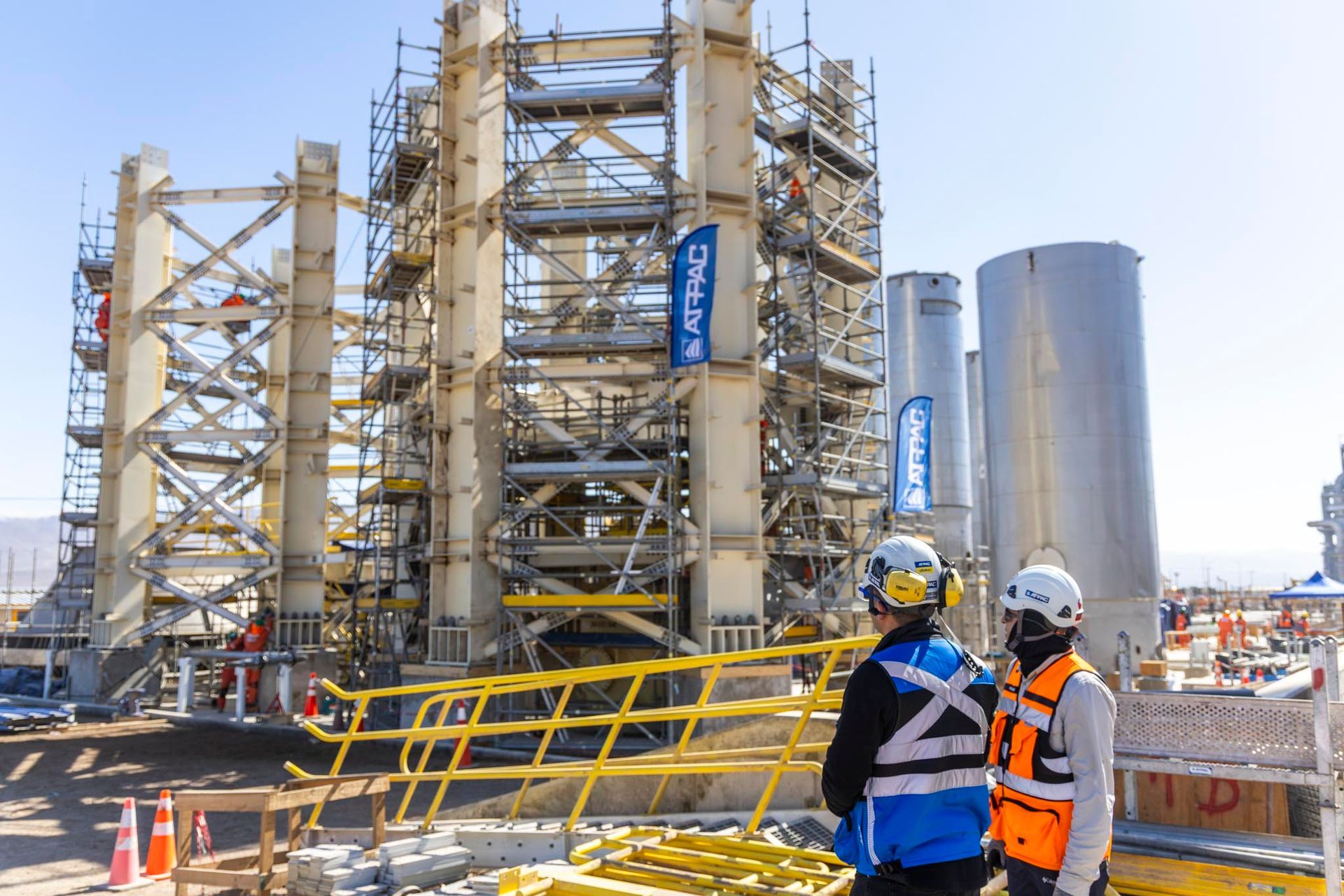
AT-PAC expands presence in Latin America — with Mexico established as key operational hub AT-PAC, one of the world’s leading scaffolding solution providers and part of umdasch Industrial Solutions, announces the launch of its new operation in Mexico. With this development, AT-PAC strengthens its industrial footprint in Latin America, offering immediate availability of AT-PAC Ringlock System Scaffolding, applied engineering support, and direct operational readiness for high-performance industrial projects. Mexico City, 08.01.2026. Well established across the USA, Canada, Europe, Australia, the UK and multiple LATAM regions, AT-PAC now advances into Mexico — a strategic market with growing industrial demand and large-scale operational potential. The expansion aims to support EPCs, asset owners and contractors with local inventory, engineering guidance and high-efficiency industrial access solutions. AT-PAC guides customers through the full lifecycle of an industrial scaffolding project — from engineering, documentation and planning, to material supply, field support and digital asset control. The core objective remains unchanged: safety, precision and performance in industrial environments. Direct value for the Mexican market According to Isaac Tovar, Commercial Director Mexico, the company’s arrival represents more than material access — it is a technical and operational support system designed to prevent downtime; "Every industrial challenge in Mexico becomes our mission. We respond with engineering, local availability, and specialized technical support to ensure continuity and efficiency in every project." With inventory positioned locally and a dedicated commercial and engineering team, Mexico now gains faster turnaround capabilities for high-demand industrial operations. Looking ahead For Rodrigo Arce, Regional Director LATAM, this is only the beginning of AT-PAC’s long-term vision in the region; "Mexico is a strategic point for Latin America. This operation strengthens capacity, accelerates response and establishes a new industrial scaffolding standard for the region." Alongside material availability, the Mexico hub will offer: ✔ Ringlock System Scaffolding for sales & rental ✔ Engineering, design & technical planning for industrial access ✔ On-site support and safe execution consulting ✔ Hi-Vis Scaffold Management Software for digital control and traceability ✔ Technical documentation, training and operational partnership