

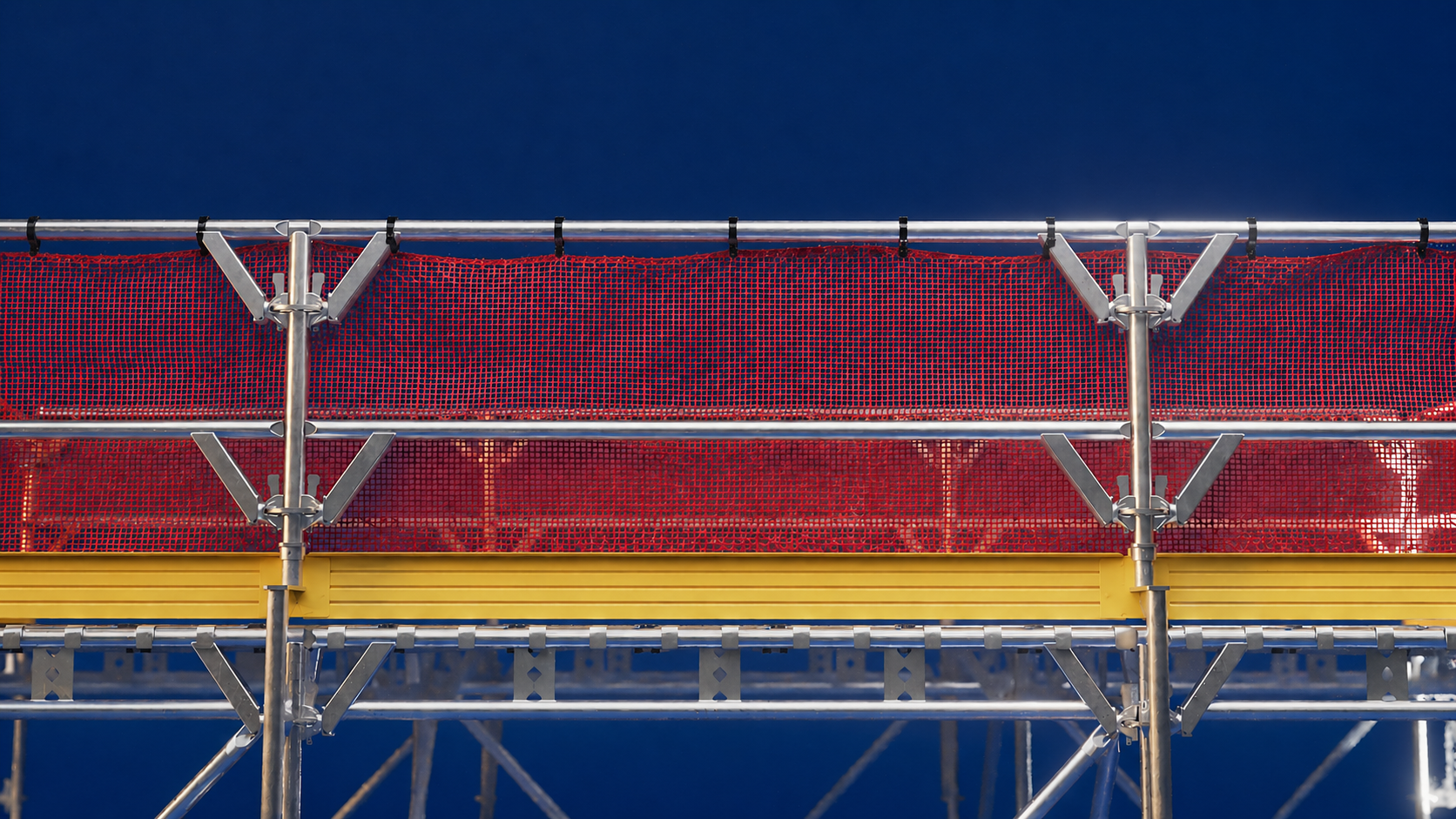
Out with the mesh netting. Brickguards move work forward.
On long runs of scaffold, traditional mesh netting can consume valuable labor hours: unroll it, stretch it, tie it, overlap it, retighten it, cut around obstacles. Then repeat, bay after bay.
AT-PAC Brickguards change that.
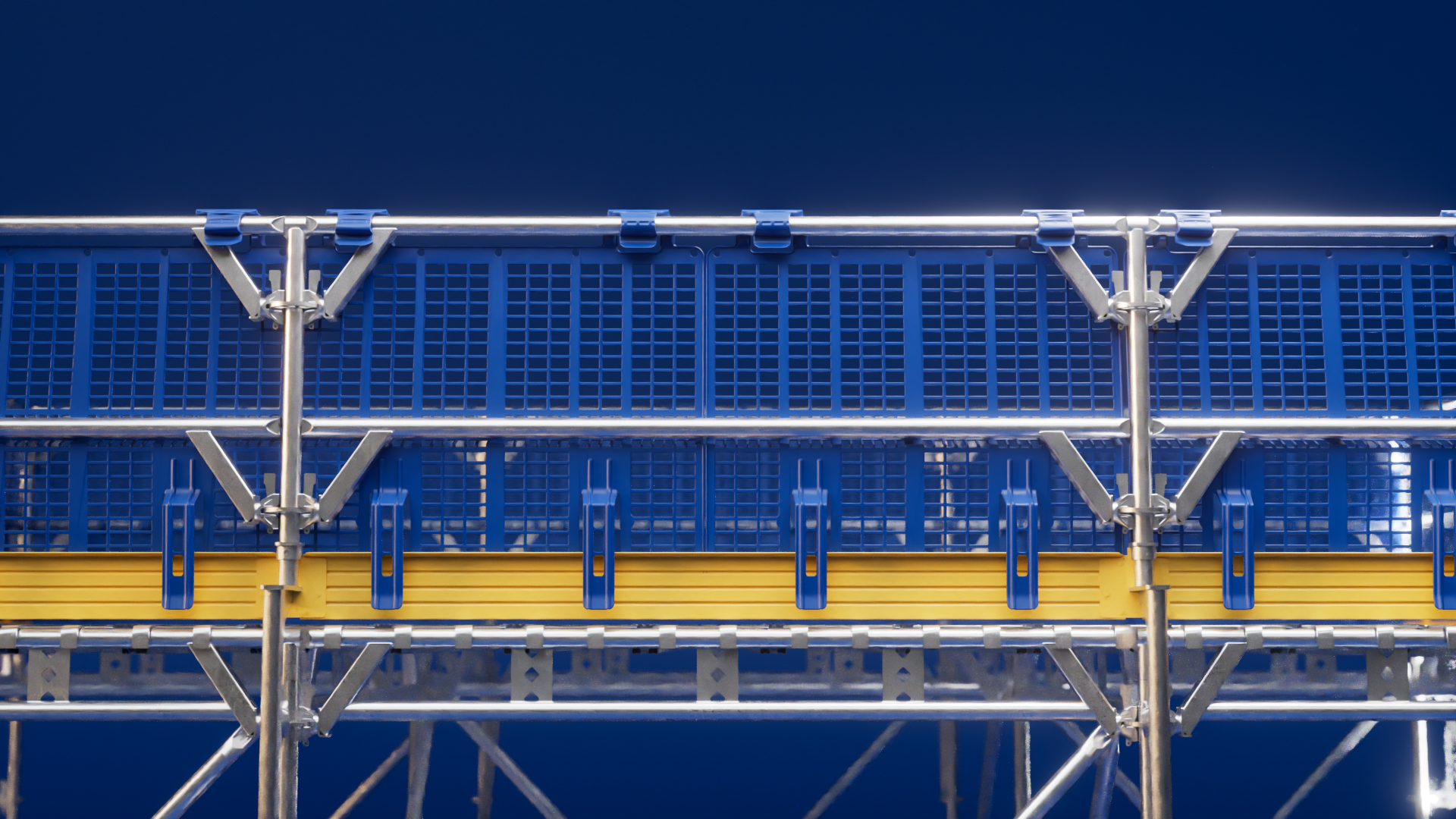
These high-visibility scaffolding brickguards clip directly onto Ringlock ledgers and close the gap between toeboard and guardrail in seconds. No sagging mesh or endless cable ties. No time lost wrestling with rolls of netting.
Designed to contain falling bricks, rubble, tools, and debris, Brickguards create a cleaner and safer platform edge for industrial scaffolding, maintenance shutdowns, façade works, and construction projects.
Built from durable polypropylene and engineered for repeated use across multiple projects, Brickguards deliver long-term value where disposable scaffold netting becomes recurring cost. Stackable, transportable, and fast to redeploy, they help crews work smarter job after job.
Wind rated up to 100 mph, with overlapping connections and extended toeboard fixings, Brickguards stay secure where traditional debris netting often becomes a compromise.
And because they also work with tube & coupler scaffolding, they fit mixed inventory just as easily as Ringlock.

Snap on Tube Connector
Brickguards are fast to install onto the Ringlock Ledger due to the snap on design. This allows the installer to quickly install Brickguards with a single installation.
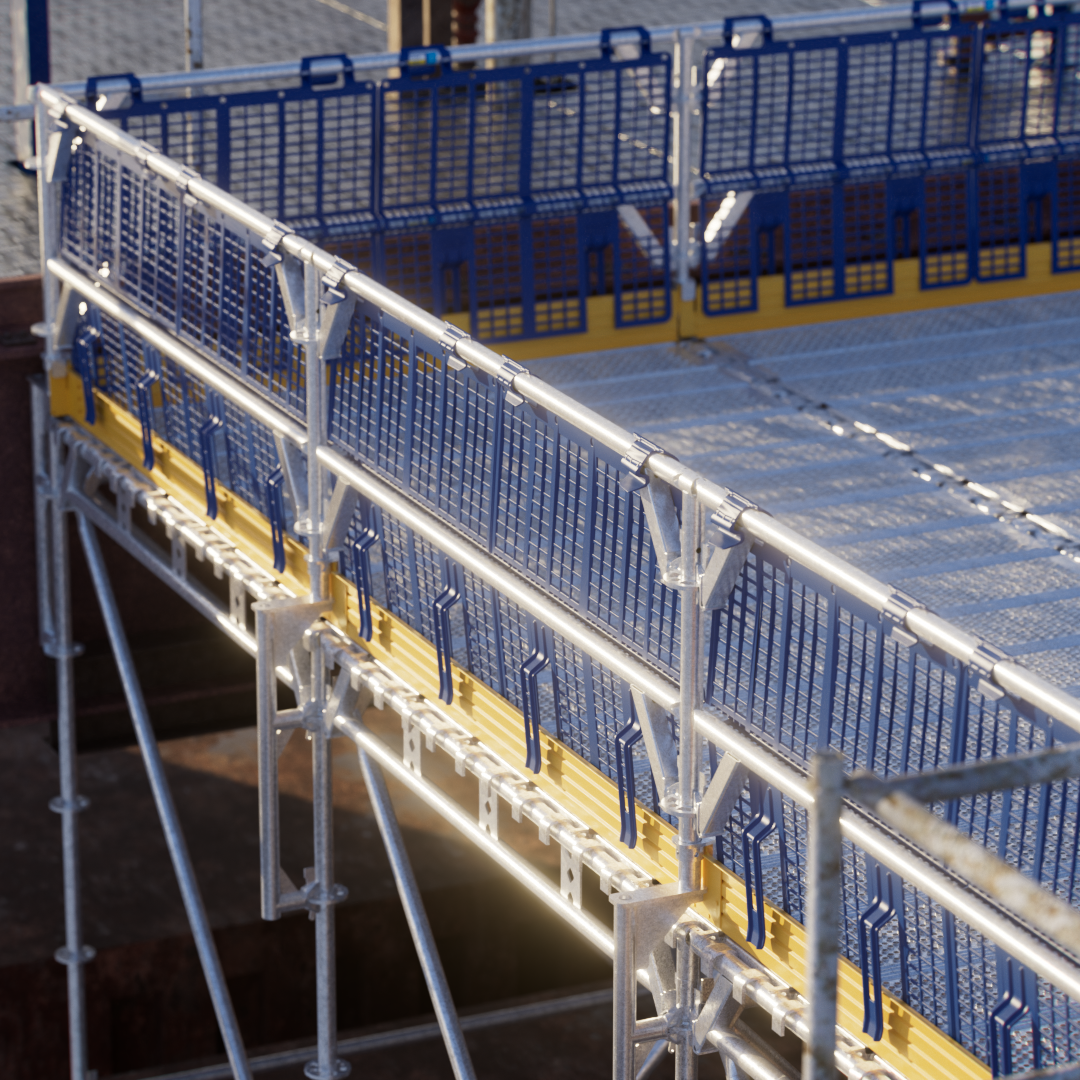
Designed with a groove to bypass Ringlock Rosette
So that the Brickguards can be continuously installed a groove is integrated in to the middle of the brick guard.
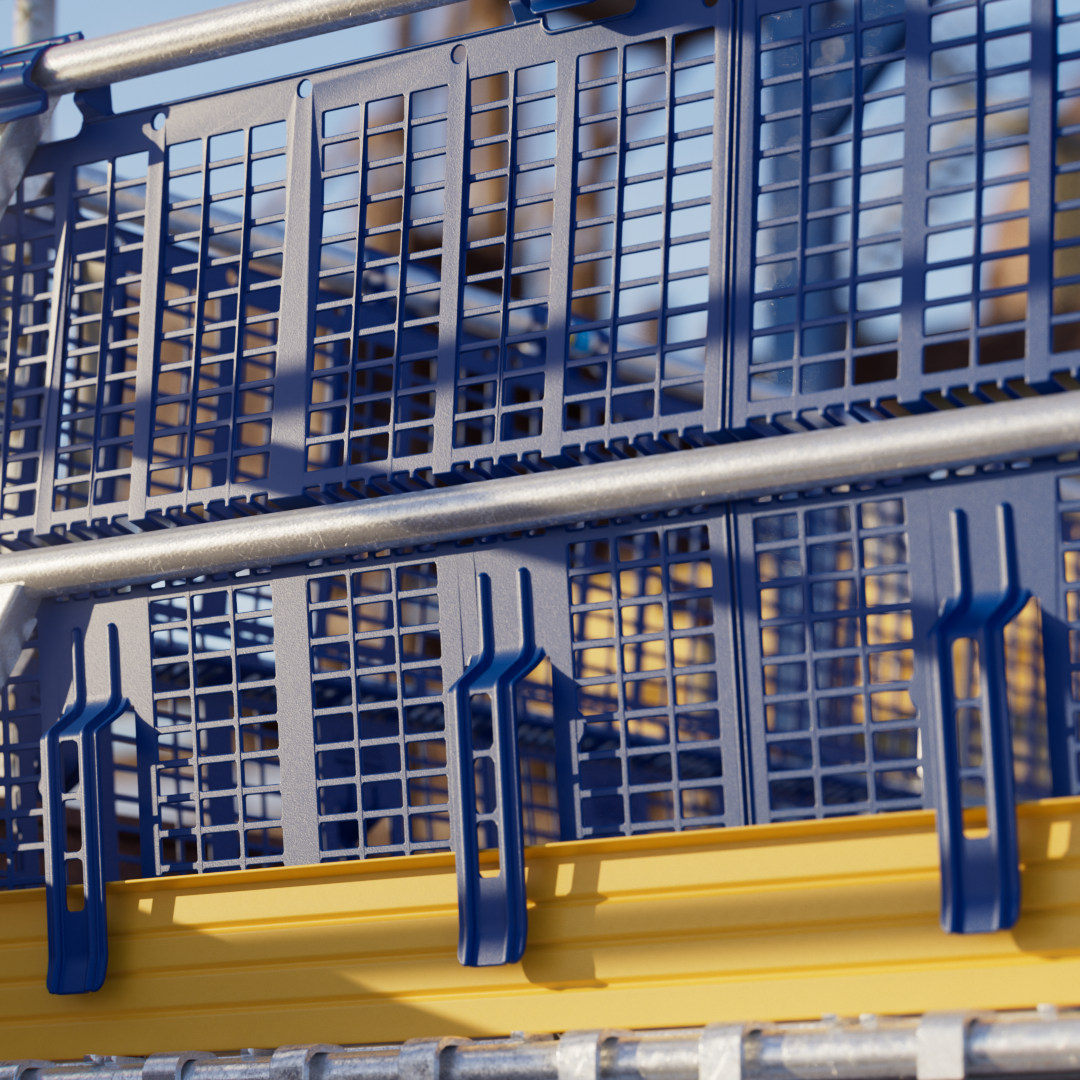
Toeboard Connection
The Brickguard can accommodate either Ringlock Steel Toeboard or a 2"x4" Timber Toeboard.

x150 per pallet
Stack 150 per bundle for compact transportation and re-use.
A single panel that works regardless of the scaffolding bay size, Brickguards stand for high efficiency.
Due to its clever design that bypasses the Ringlock rosettes, the panel is available in a single size only, making it easier to transport, store and install on any scaffold design.
Lightweight & re-usable

Lightweight to keep crews moving
At only 2 kg (4.4lbs) per panel, Brickguards are easy to carry, lift and install across the scaffold, reducing effort and speeding up work, even at height.

Stacks neatly
The shaped panel design allows Brickguards to stack securely on top of each other, saving space in transport, simplifying storage, and making site logistics more efficient.
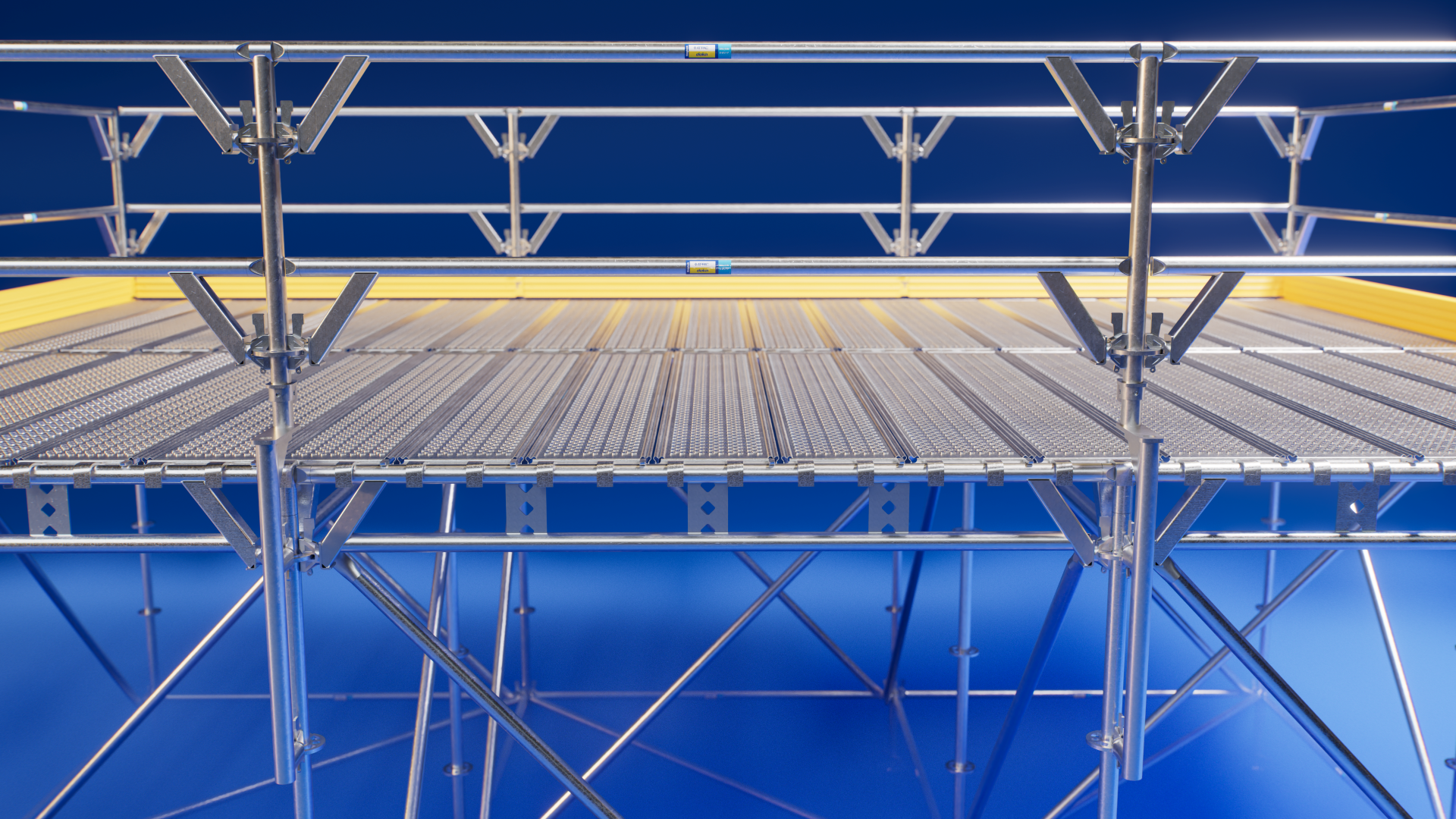
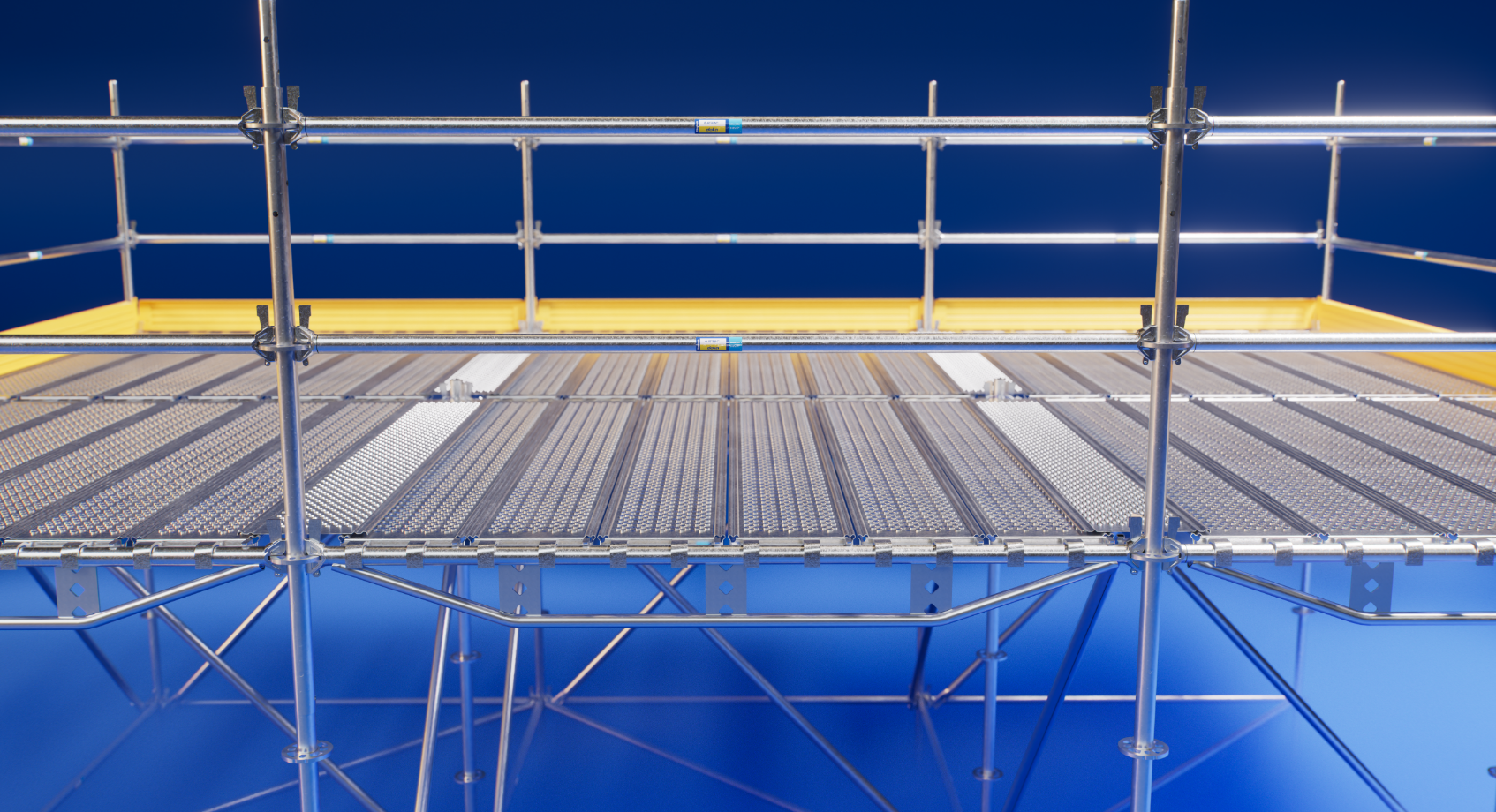
Compliments the 3-part edge protection
Closing the gap between guardrails and toeboards, Brickguards create a safer scaffold perimeter and better debris containment.
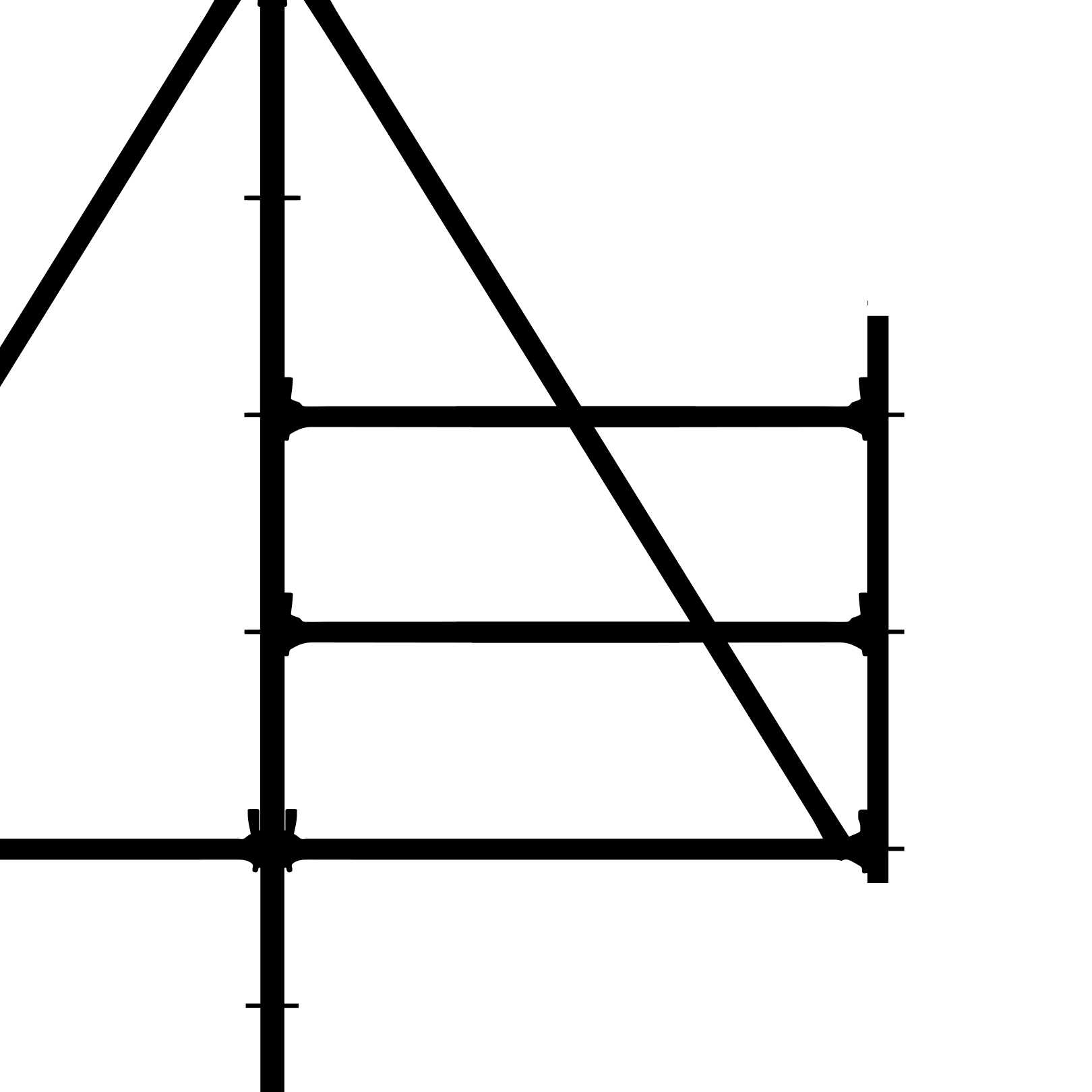
Ringlock Compatible
Designed specifically for AT-PAC Ringlock and the Ringlock Toeboards.

Stays secure on windy conditions
The permeable, open-mesh design allows wind to pass through the panel, helping maintain stability while keeping materials contained.
Snap on connection
Snap-on Ledger connection makes installing the Brickguards quick and easy when compared to traditional methods.

No tools. No extra fixings. No delays.
Brickguards cut installation time by locking securely into place without cable ties, clips, or extra accessories. And they stay.
"Our customers want to save time and reduce costs—and the AT-PAC Brickguard delivers exactly that. Compared to traditional mesh debris netting, it’s faster to install, fully reusable, and easy to store and transport between job sites."
— Austin Bennett
Senior Product Manager, Houston, USA
What are Brickguards in scaffolding?
Brickguards are protective barriers installed on scaffolding systems—typically between the handrail and toeboard—to prevent tools, materials, and debris from falling from elevated work platforms. These provide an alternative to traditional methods such as mesh debris netting
They are a critical safety component used across construction, infrastructure, and industrial projects to protect workers and the public below.
Why are Brickguards important for construction safety?
Brickguards play a vital role in reducing one of the most common construction hazards: dropped objects.
They:
- Contain loose materials on scaffolding platforms
- Improve protection for works and pedestrians
- Reduce accidents and near misses
- Improve overall site safety compliance
Falling debris is a leading cause of injuries on job sites, making brickguards essential for safe operations.
How do AT-PAC Brickguards improve site safety?
AT-PAC Brickguards are engineered to go beyond standard protection by offering:
- Enhanced stability in high winds and harsh conditions
- Secure attachment to prevent dislodging or gaps
- Durable materials that withstand impact and long-term use
- Reduces labour reworks to repair or replace traditional mesh, reduces man hours at height
- Highly visible colour to help identiy the working platforms
This ensures consistent containment of materials and minimizes risk on complex, high-activity sites.
What materials are Brickguards made from?
Modern Brickguards are manufactured from:
- High-impact polypropylene plastic (lightweight and durable)
These materials are designed to withstand tough environments, including extreme weather and heavy use.
Are Brickguards required for scaffolding compliance?
No—Brickguards are often strongly recommended to meet scaffolding safety regulations, especially on projects involving work at height.
They help contractors:
- Comply with safety standards (e.g., BS EN 12811), WAHR (2005) and conform to UK NASC SG:10-19 guidance
- Reduce liability risks
- Pass safety inspections more easily
Using Brickguards is a key step toward maintaining a compliant and audit-ready site.
How easy are Brickguards to install?
Brickguards are designed for fast and efficient installation:
- Lightweight and easy to handle
- Attach directly to scaffold guardrails
- Typically require no specialist tools
- Unique lipped handle design promotes easy attachment to all tubular handrails.
This reduces installation time and keeps projects moving efficiently without compromising safety.
What makes AT-PAC Brickguards different from standard brickguards?
AT-PAC Brickguards stand out through:
- Superior durability and weather resistance
- Secure locking mechanisms for added safety
- Versatility across scaffolding and handrail systems
- Optional branding for professional site presentation
- AT-PAC Blue, other colours are available upon request
- One size fits all
- Unique centre profile bypasses system rosette's
They are engineered to perform reliably across multiple industries and Ring system scaffold—not just with traditional tube and fitting (coupler) scaffold construction.
Can Brickguards be used in different industries?
Yes. While commonly used in construction, Brickguards are also widely used in:
- Oil & gas
- Infrastructure projects
- Marine environments
- Industrial maintenance
Their adaptability makes them a universal safety solution for any work-at-height application, inlcuding with traditional Tube & Fitting (Clamp) scaffolding.
Do Brickguards improve productivity on site?
Yes—Brickguards help maintain workflow efficiency by:
- Reducing risk of dropped tools and materials
- Reducing downtime caused by accidents
- Allowing workers to focus on tasks safely
Safer sites are more efficient sites, with fewer interruptions and delays.
Are Brickguards durable for long-term use?
High-quality Brickguards are built for long-term performance:
- Resistant to weather, corrosion, and impact
- Maintain structural integrity over time
- Reduce replacement and maintenance costs
This makes them a cost-effective investment for both short- and long-term projects.